Personal project · single-file web app · open source
Learning Russian vocabulary isn’t just memorizing a word. You also have to remember where the stress falls, which textbooks usually don’t mark and which can change the meaning, and what gender a noun is, which decides every ending around it. Most flashcard apps treat a card as two plain strings, so both of those get lost.
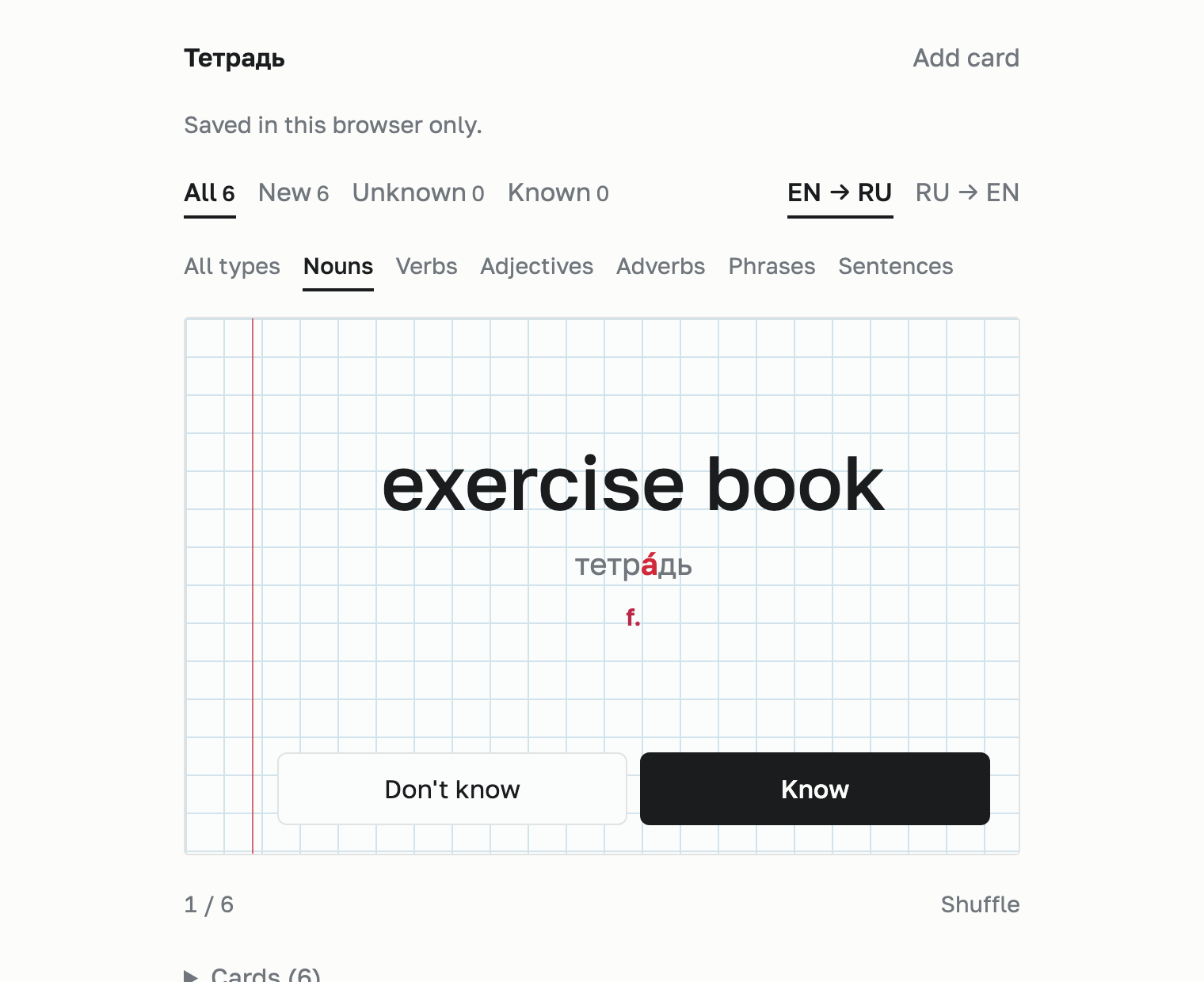
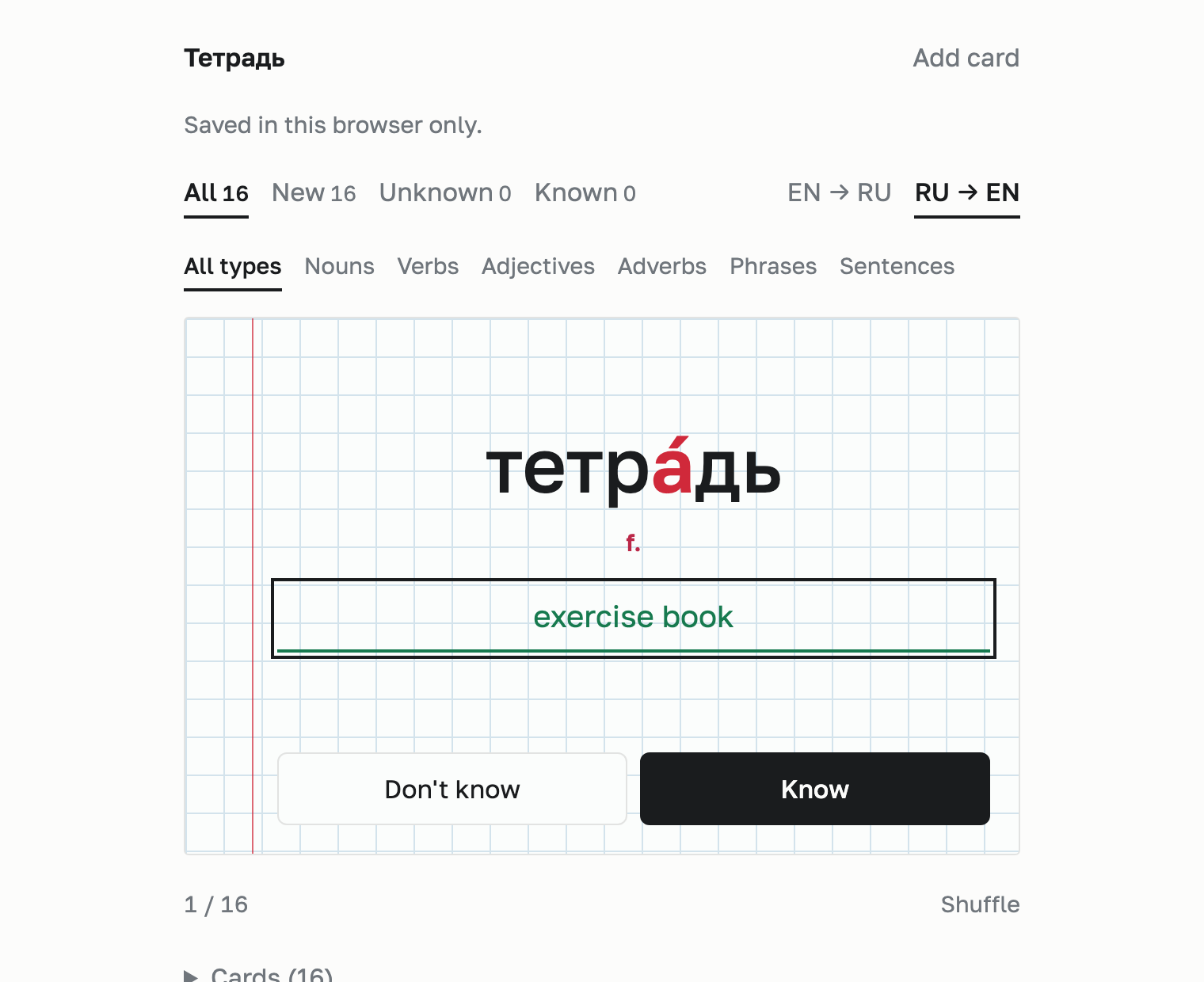
Тетрадь (tetrad’, “exercise book”) keeps them. Every card is a page of squared school-notebook paper with a red margin line, the kind of exercise book Russian students actually write in. The stressed vowel is printed in red pencil, and nouns carry a colored gender mark.
What It Does
вода’ becomes вода́ without hunting for a combining accent. When it runs as a Claude Artifact, you can also add cards from photos of textbook pages or handwritten lists: Claude reads them, fills in stress, gender and part of speech, and you check every row before it’s added.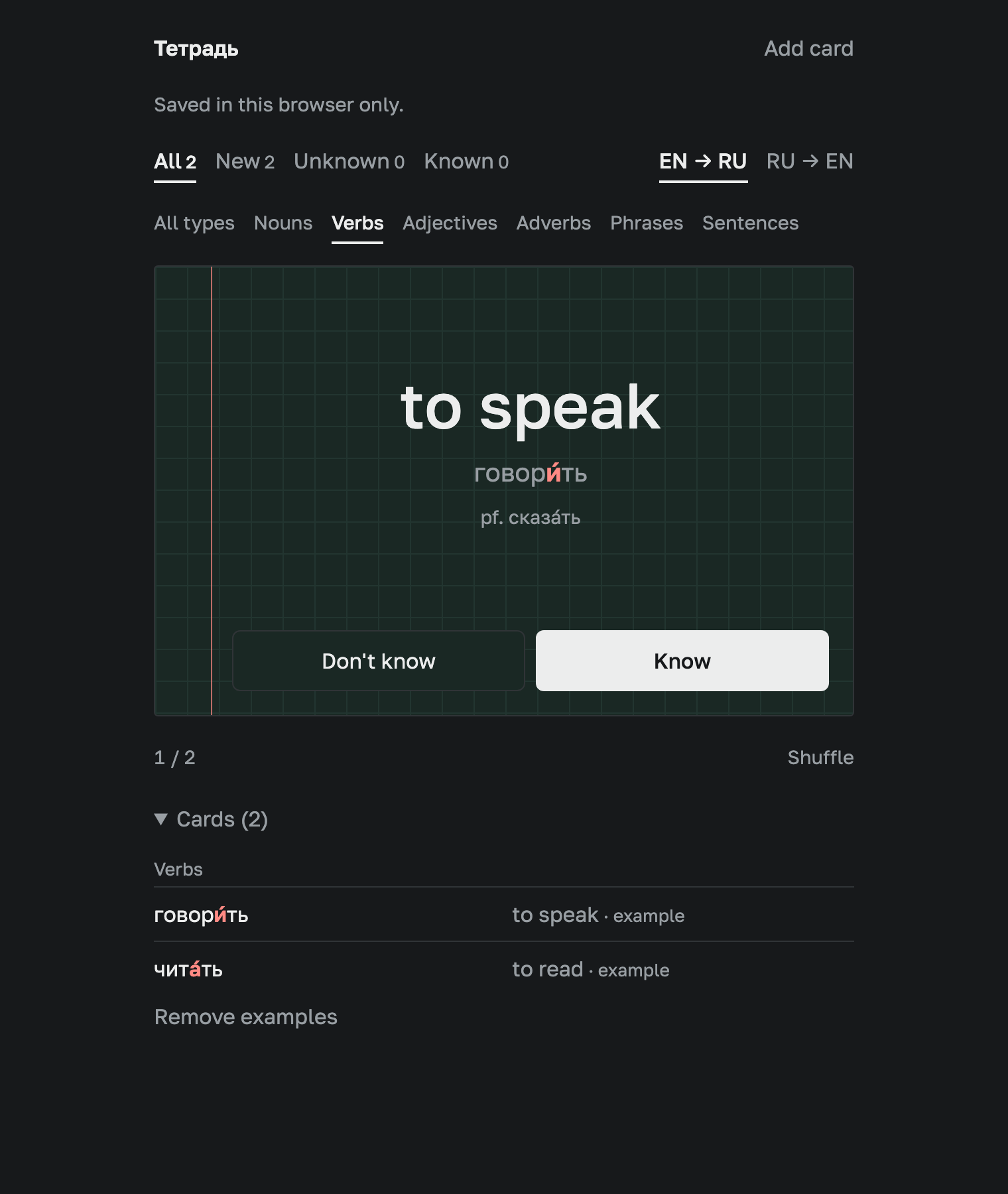
Design Process
The whole look comes from one object: the squared тетрадь exercise book. The card is a sheet with a 24px blue grid and a red margin line, and the only other color on the page is the red used for stress, as if marked in pencil by a teacher. One typeface (Golos Text, designed for Cyrillic) and a single narrow column keep the focus on the word itself.
I kept the controls quiet on purpose: plain text tabs for filters, one dark button for the main action, and keyboard shortcuts for the review loop, so a study session is mostly reading and remembering, not clicking.
How It’s Built
index.html with vanilla JavaScript and no dependencies. Stress is stored as the Unicode combining acute accent (U+0301) after the vowel, and rendered by splitting the word on it.localStorage and hides the photo button, with no setup.