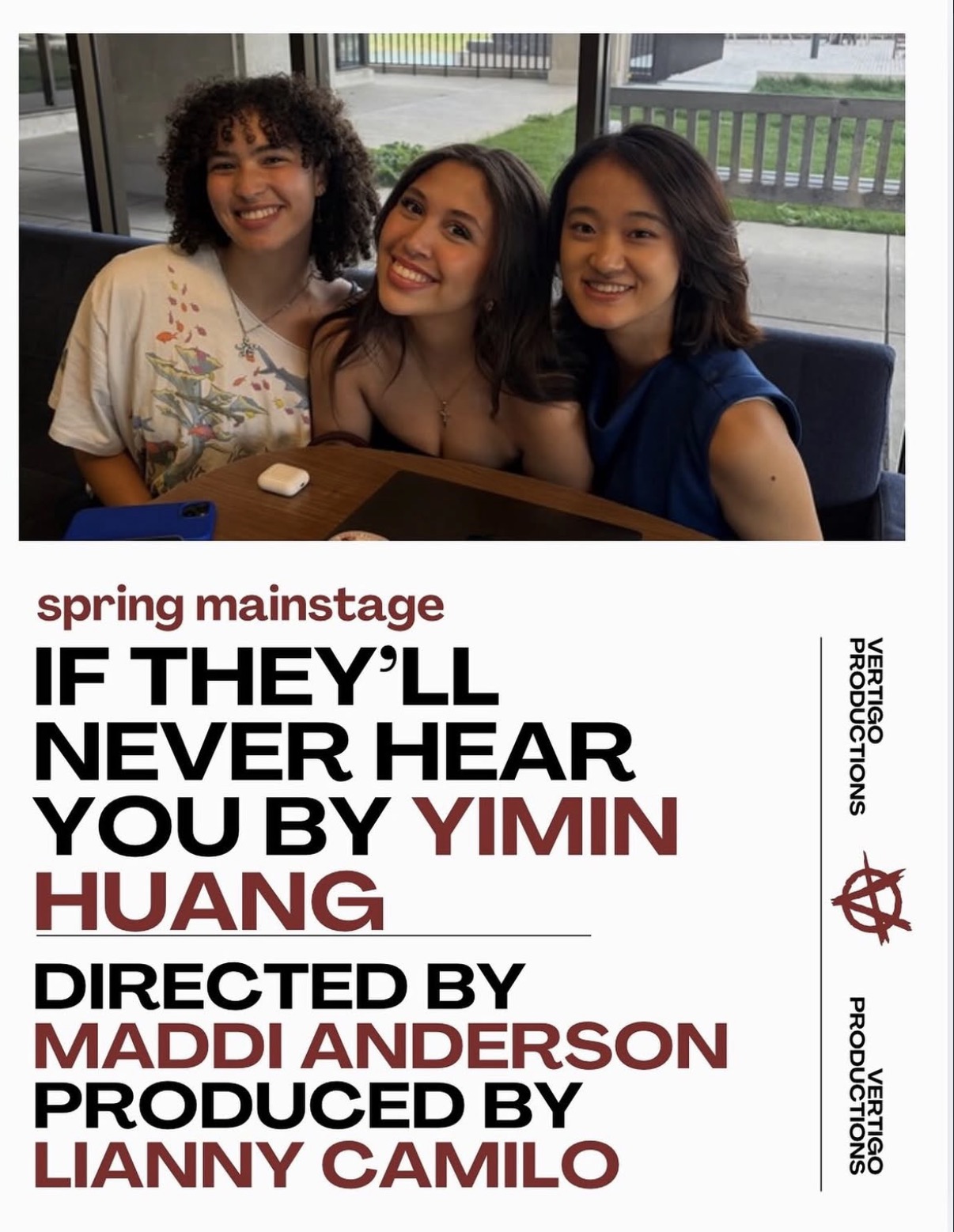
My play was selected as one of five works to be produced through Vertigo Productions — Northwestern’s only student theater board dedicated entirely to supporting new work — booking the spring mainstage slot through open submission. It opens April 2027. I’m so excited to keep developing this play alongside the production team, and I’ll be sharing what I’m learning and feeling as more things unfold!
Logline
On the final day of a strange café where only the same few people ever seem to exist, a bewildered stranger arrives looking for someone named Joy. The café’s regulars, each trapped inside their own absurd archetype and the peculiar logic of a half-finished play, begin reconstructing her from fragments of memory they did not know they carried. As their recollections unfold, their roles start to crack, revealing desires, fears, and inner lives that no one wrote for them. The stranger is forced to confront the truth: he is the playwright who created them, a bad writer who has been rejected so many times despite his love for the characters, only to find that the characters made something of themselves anyway. Joy is the one he loved and lost, the one in every line he ever wrote even when the lines aren’t good enough. He came back to say goodbye to the play she believed in, and say goodbye to her.
It started with my rejected play.
Months of work, all the hesitations and expectations, the characters I knew better than most people I’d met, an entire world I’d built from scratch. And then an email: however, we will not be using your play. I know rejections happen. I know you’re supposed to handle it with grace and move on. But I was just really, really sad. It felt like someone I loved had died and how the fuck am I supposed to just move on from that?
So I started writing this. I imagined a bad writer, objectively, cluelessly bad, who gets to walk into his own rejected play. I imagined the characters he wrote: absurd, archetypical, clumsy, too aware of what a good play is supposed to have. A detective who says profound things that mean nothing. A waitress waiting for her real life to begin. A woman fighting for a cause she can’t quite name. A man who was written to be background and nothing else. Bad writing from someone who is new and clumsy with his pen and trying too hard.
But that’s the question I keep asking myself: Is that what matters most? The technique, the structure, the craft? Or is it something else entirely, the love, the care, the fact that you knew exactly how your character holds a coffee cup and why she wrings the cloth that specific way and what she’s afraid of that she’d never say out loud?
I’d like to think that once you start writing, the characters stop belonging to you. You love them so much that you imagine whole lives for them, the small details, how they grew up, the specific textures of who they are, and somewhere in all of that imagining, they start to go their own way. They figure out what they want. They develop hopes and fears you didn’t give them. They become more than you made them. That’s what’s happening in this play. Eddy wrote these people badly and loved them completely, and the love was enough to make them real. Real enough that they outlasted the rejection. Real enough that they found their own way to the ending.
This play is very much about love. I used to think that was cliché. Then I realized it’s all I’ve ever wanted to write about. It’s about Eddy’s love for the characters, but also for Joy. Everything we write is about love. Every character we make carries something of everyone we’ve ever known. We write about the way someone sat in a chair, the specific joke they made, the thing they said that we’ve been turning over ever since. And we call it fiction, call it craft, call it a play about a café on its last day. But really we’re just trying to keep something alive. We’re trying to find the only form that can hold it.
But then comes the question that I think every artist, or every person who has ever loved something deeply enough to make something out of it, would ask: what if no one in the world will ever be able to see what you have made? Or, as the line that the title of this play comes from puts it: what’s the point of singing songs, if they’ll never even hear you?
And I’ll be honest, they’re lying when they say they only write for themselves. Who doesn’t want to see what’s in their mind on stage? Who doesn’t want the thing they made to reach someone? When you put in that much love and effort, you want the world to see it. You want it to matter to someone other than you.
Joy read Eddy’s play. She was the only one who truly did, who saw the characters as real before anyone else did, who said I forget you exist when I’m reading this. And all the characters live with her now. And then she was gone. So then what happened? Are the characters just gone with her? It’s the same as losing someone you love: what happens to all the memories you had together, to the part of yourself that only existed with that person? Is everything just gone when they’re gone? And if it is, what was the point of any of it? What’s the point of creating all the beautiful memories together, what’s the point of loving someone, something that deeply, just for everything to inevitably go away in the end?
What I believe, what I have to believe, is that the love you put into something gives it a life that outlasts the rejection, the ending, the death. That the characters don’t disappear just because the play didn’t get produced, just because they’re gone. They’re somewhere, in the world you built for them, still going. And the one person who read them and felt something real carries them now, forever. Just like the people we love, they don’t just disappear in the end. They end up in everything we make, in every piece of ourselves. In the way a character sits in a chair, in the spelling of a word on a chalkboard that nobody corrects, in a play about a café that was always, without knowing it, about them.
And maybe that’s the only way to let go.
I’m still writing this play and I still don’t know if it’s good. I question it constantly, and I question if I’m just a shitty writer who’s just stupid and talentless and doesn’t have what it takes and everyone will hate it when they see the play. I channel everything, the doubt, the grief, the stubbornness, the anxiety, into Eddy. That’s what’s so strange and miraculous about writing. You put yourself into something and it becomes its own thing and then it tells you what it’s about.
One more thing: when the audience walks in, they may not be sure whether they’re the audience or something else entirely. That’s intentional. The characters don’t know they’re in a play. Eddy doesn’t know he’s in his own rejected play. And maybe the audience has been inside the play the whole time.